

Nature Where We Live
Audubon Western Everglades
Nature Where We Live
Native plants around homes make a difference — for birds, for wildlife, and for the places we share with them in Southwest Florida. This campaign gathers practical ways you can help where you live.
What you can do at home
Nature Where We Live connects everyday yards and neighborhoods with habitat for owls, songbirds, gopher tortoises, and the plants that sustain them. Pick an action below. Start with one small step.
Or browse the Native Plants guide, or listen to the WGCU interview.

Photo: Audubon Western Everglades

Photo: Audubon Western Everglades
Habitats for Owls
Starter Burrows
Urban Burrowing Owls primarily reside on vacant lots among increasing development on Marco Island. To provide habitat, AWE implemented a starter burrow safe harbor program in partnership with the City of Marco Island and Florida Fish and Wildlife Conservation Commission. The start of a burrow is dug in front yards of willing homeowners.
What are the Requirements?
A small area of the front yard free of dense vegetation and suitable digging. Side yards and backyards can be considered depending on the habitat. Homeowners are not allowed to use any type of rat poison or have outdoor cats. Dogs need to be kept on a leash when near the burrow area. We recommend limiting or removing the use of pesticides and herbicides especially around the starter burrow. Email us at owlwatchmarco@gmail.com to become a part of our starter burrow program!
What is a Starter Burrow?
Using a rounded spade shovel, we dig 6 inches down to ensure there is suitable substrate for digging. Weed whacking may be necessary to get through the grass layer. A fresh mound of sand or dirt is created at the entrance to mimic an apron. A t-perch is installed. PVC and rope is not required around the burrow, but it is suggested to have some sort of protections if the burrow becomes excavated by an owl (dug past 18 inches) and there is a concern for landscapers mowing with heavy equipment.
How are they maintained?
Maintenance is simple to keep the burrow attractive to the owls. Grass needs to be kept low, burrow open and free of weeds, and apron of sand/dirt fresh. Adding white sand sometimes helps draw in the owls.
What is Safe Harbor?
The Safe Harbor agreement ensures owls and potentially occupied burrows are kept protected. Owners that sign the agreement are able to have the burrow removed at any time of the year under a free permit as long as there is no current nesting activity or flightless chicks. Owners need to reach out to AWE's Biologist to apply for removal. Upon selling a home, it is the homeowner's responsibility to educate the new owner of the presence of the burrow and options.

Starter burrow with a T-perch. Photo: Audubon Western Everglades

Starter burrow in a front yard. Photo: Aisling Gray

Photo: Audubon Western Everglades
Gopher Tortoise Habitat
Gopher Tortoises are a keystone species documented to provide habitat with their extensive burrows to over 350 other species. In Florida, they are facing rapid habitat loss and were reclassified as critically endangered by the IUCN (July 2026 reassessment) after populations fell by more than 80% over the past three generations (Center for Biological Diversity).
To provide habitat to nearby tortoises in your own yard, ensure there is suitable digging areas with native plants ideal for foraging. Additionally avoid using pesticides and herbicides. While mowing, avoid using heavy equipment over the tunnels as they can easily collapse.
For land owners, consider donating your property or check out Conservation Collier's land acquisition program!
On the road — and when an animal is hurt
Prevent car strikes
Watch for tortoises (and burrowing owls) on roads, especially near habitat edges.
Help across the road
If it is safe for you to stop, help them across in the direction they are already going.
Never put a tortoise in water
Do not put any tortoise or turtle in water. Let the animal decide where it wants to go — especially if you do not know the species.
Injured wildlife
For injured animals, contact von Arx Wildlife Hospital in Naples at 239-262-2273 (8 a.m.–5 p.m. daily).

Sharing Space with Owls & Tortoises
What to do when you meet a burrowing owl or gopher tortoise, and how to keep habitat open and sunny.
Protected neighbors, shrinking habitat
In Florida, both the burrowing owl and the gopher tortoise are listed as State Threatened. Burrowing owls live in open, treeless places with short groundcover, like pastures, fields, and vacant lots, and FWC says their numbers have dropped as that habitat disappears. Before land is cleared or developed, gopher tortoises have to be relocated under an FWC permit.
Keep it open, low, and sunny
-
Owls need to see predators coming. FWC says an average vegetation height under 5 inches within 10 feet of a burrow is ideal. Trim with a string trimmer, not a mower, and never mow over the entrance (FWC guidance).
-
Tortoises graze on low-growing plants like prickly pear, wild grape, and beautyberry. They usually feed within about 160 feet of their burrow, so leave sunny, open forage areas.
-
Don't let shrubs and trees shade over a burrow area, and keep pesticides away from burrow entrances.
-
If you meet an owl or a tortoise, give it space
-
Watch from a distance. FWC guidelines call for a buffer of at least 33 feet around owl burrows during breeding season (Feb. 15 to July 10) and 10 feet the rest of the year.
-
Leave tortoises where they are. Moving or relocating a gopher tortoise without an FWC permit is illegal.
-
Keep dogs and kids away, and never block a burrow.
-
Sick or injured owl or tortoise? Call von Arx Wildlife Hospital in Naples at 239-262-2273 (8 a.m.–5 p.m. daily). For permits or harassment, call FWC.
Please don't feed or harass them. Harming or harassing these species without a permit is against the law. Feeding wild animals can lead to poor nutrition, crowding, and disease. It also draws in predators and teaches animals to depend on people. Owls eat insects and small animals, not human food. Food left at a burrow only attracts their predators. To report harassment, call 888-404-FWCC.
AWE's work
Through Owl Watch, which started in 2016, more than 100 trained volunteers monitor over 300 burrow sites on Marco Island each nesting season. They post and maintain perches and protective fencing around burrows.
Take action
Photo: Audubon Western Everglades

Photo: Brittany Piersma, AWE
Cats Indoors
Keeping cats indoors protects wildlife — and cats
Domestic cats are responsible for killing an estimated 2.4 billion birds per year in the U.S., as well as many other species of animals. Even if well fed, hunting instincts take over and often they will have greater success. Cats face many risks of their own outside including car strikes, predators, poison/toxins, diseases/parasites, etc. Keeping cats indoors keeps them healthier and protects all wildlife.
A careful note on community cats
This page focuses on keeping pet cats indoors for the health of cats and wildlife. Conversations about trap-neuter-return (TNR) and community cats are best handled with education and local rescue partners — not confrontation. AWE welcomes thoughtful dialogue that keeps birds, cats, and neighbors in mind.
Give your cat a full, safe life indoors, with fresh air on your terms.
Make indoors interesting
Ohio State's Indoor Pet Initiative says a cat-friendly home starts with a few basics:
-
A space of her own with food, water, a bed, a litter box, and toys
-
A scratching post, plus places to climb and window perches for bird-watching
-
Food and litter boxes kept away from noisy appliances, with the litter scooped every day
-
Praise, not punishment. Cats respond to praise, not force
-
When you change food, litter, or toys, set the new one next to the old so your cat can choose
-
Regular vet checkups
Play together often, and consider extras like a cat exercise wheel (ABC).
Safe time outside
Your cat can still enjoy sunshine and fresh air while staying contained (ABC Solutions for Indoor Cats, linked above):
-
A catio: a window perch, a patio enclosure, or a free-standing run
-
Cat-proof fencing that keeps your cat inside your yard
-
A harness and leash (yes, cats can be leash-trained)
-
A cat stroller or backpack for supervised outings
Switching an outdoor cat to indoor life? Make the indoor space as rich as you can, and ask your veterinarian for tips.
Responsible pet ownership in Collier County
In Collier County, dogs and cats over four months old need a current rabies vaccination and a county license. Pets must be kept on your property or walked on a leash, and they can't run at large (Collier County Domestic Animal Services). Spaying or neutering means less roaming and fewer unwanted litters. Keep dogs leashed and away from owl and tortoise burrows.
Take action
-
Love Cats, Love Wildlife Pledge
-
Catio & leash ideas (ABC)

Photo: Audubon Western Everglades
Seal Buildings & Use Poison-Free Rodent Control
Keep rodents out without poison, and protect the owls, hawks, bobcats, and pets that share our neighborhoods.
Why rats get in, and how to seal them out
In Southwest Florida, the rat getting into homes is the roof rat, also called the black rat, palm rat or fruit rat. Rodents come in for food, water and shelter. The CDC says a mouse can fit through a hole the width of a pencil, about 1/4 inch, and a rat needs only a little more. A structural problem needs a structural fix: seal the gaps they use to get in.
Walk around the building with a flashlight and check:
-
Roof edges, eaves, soffits, and gables
-
Doors and windows without weather stripping, plus garage thresholds
-
The gap between the foundation and the ground
-
Attic and crawl-space vents
-
Holes for plumbing, electrical, cable, gas, and dryer lines
CDC suggests packing small holes with steel wool held in place with caulk or spray foam. For bigger gaps, use hardware cloth, metal sheeting, or cement. Don't forget garages and sheds.
Why rat poison backfires
Anticoagulant rodenticides don't kill right away. Poisoned roof rats get sick and wander, so you see more of them, often in the open, and a rat that keeps feeding for days can hold many times a lethal dose. Owls, hawks, bobcats and pets that eat them get poisoned too (EPA). Raptors that keep eating poisoned prey build up the toxin, which can lead to weakness, seizures, kidney failure and death (American Bird Conservancy). In a National Park Service study in Southern California, 92 percent of bobcats tested had been exposed. And poison leaves the gaps open, so new roof rats move right back in.
Poison-free steps, in order
1. Seal every entry point.
2. Clear the rats already inside. Use indoor mechanical traps only together with sealing, to clear them out all at once. Once the home is sealed, there's no ongoing killing.
3. Take away food and cover. Keep food, pet food, birdseed and feed in tight-lidded containers, bring pet bowls in at night, use tight-lidded trash cans, keep grills clean, pick up fallen fruit, trim branches back from the roof, and move construction or landscape debris piles and compost away from the house.
4. No traps outside. They can catch birds, pets and other wildlife.
5. Extra reduction, after sealing only. A fertility control bait like goodbites, used at Mackle Park and on City of Marco Island properties, can cut the outdoor population further.
-
Call a professional if you have rodents in walls or ceilings, if openings are high up or structural, or if you manage a multi-unit or commercial property. Ask whether the company starts with exclusion and offers poison-free service.

Seal Em Out helped the City of Marco Island and local condo communities move away from rodenticides.
Owl Friendly practices
AWE encourages poison-free rodent management through its Owl Friendly certification. Businesses, HOAs, and municipalities can help by writing wildlife-safe, poison-free pest control into their landscape and pest-management contracts and policies.
Take action

Photo: Audubon Western Everglades
Choose Native Plants & Reduce Turf
Trade some lawn for native plants that feed wildlife, save water, and protect our bays, canals, and the Gulf.
What turf costs us
Manicured lawns now cover more than 40 million acres of the U.S. and offer wildlife very little (Audubon). Across the country, residential outdoor water use, mostly for landscape irrigation, adds up to nearly 8 billion gallons a day (EPA WaterSense). When extra fertilizer washes off our yards, nitrogen and phosphorus end up in local water. UF/IFAS notes that keeping these nutrients out of the water improves the health of the whole ecosystem (Florida-Friendly Landscaping Guide).
Why native plants matter
Native plants grew up here alongside our insects and birds. Research cited by Audubon found native oaks host more than 500 kinds of caterpillars, while an imported ginkgo hosts five. A single brood of chickadees needs over 6,000 caterpillars. Natives from AWE's plant guide, like firebush, coontie, beautyberry, and sea grape, give wildlife nectar, berries, seeds, cover, and places to nest. UF/IFAS calls this "Right Plant, Right Place": plants that suit their site need less water, fertilizer, mowing, and pesticide. That saves you time and money. It also makes local water rules easier to live with. In Collier County, you can irrigate no more than three days a week, and never between 10 a.m. and 4 p.m.
Convert a little at a time
UF/IFAS suggests converting a yard in phases over about three years (FFL Guide, linked above):
-
Map your yard: sun, shade, wet and dry spots, utilities, and views. If you have an HOA, loop them in early. Florida law says HOA documents may not prohibit Florida-Friendly landscaping.
-
Call 811 at least two full business days before you dig.
-
Plant trees first. Remove the sod, then plant densely with natives so the bed fills in. Skip the thick-mulch-and-spray cycle: dense native plantings shade out weeds without weekly herbicide (UF/IFAS Florida-Friendly Landscaping).
-
Then convert one bed at a time. Water until it's established, then cut back.
-
Keep grass only where you actually use it.
-
A simple starter bed
Picture a sunny strip along your front walk. In the back, against the house, plant Simpson's stopper or firebush for height and berries. In the middle, add clumps of beautyberry, coontie, and muhly grass. In front, use sunshine mimosa or creeping sage as a living groundcover, with tropical sage and black-eyed Susan for color. Leave a small open, sunny patch for wildlife.
Take action

Photo: Audubon Western Everglades
Dark Skies & Bird-Friendly Glass
Simple changes to lights and windows can save birds, sea turtles, and other wildlife, and often save energy too.
Why light at night matters
Every spring and fall, billions of birds migrate, most of them at night, finding their way by the night sky. Bright lights and skyglow can throw them off course. Birds then waste energy circling, and many crash into buildings (Audubon Lights Out). FWC says artificial light disrupts, injures, or kills migrating birds, sea turtles, and many other animals every year, and that turning off unnecessary lights is the simplest and most effective fix.
Light only what you need
DarkSky International's five principles for outdoor lighting:
-
Use light only if it has a clear purpose.
-
Aim it down and shield it, so it lights the ground and not the sky or your neighbor's yard.
-
Keep it no brighter than you need.
-
Use timers or motion sensors, and switch lights off when no one needs them.
-
Choose warm bulbs, 3000K or lower.
Poor shielding sends 20 to 50 percent of home outdoor lighting straight into the sky. Near the beach, follow FWC's sea turtle advice: keep lights low, use long-wavelength amber or red, and keep them shielded.
Why birds hit windows
Birds can't see clear glass, and they mistake reflections of sky and trees for open air. More than 1 billion birds die from glass collisions in the U.S. each year, and almost half of those collisions happen at homes (American Bird Conservancy). Large reflective buildings are especially dangerous.
Fix the windows you have first:
-
Start with the windows birds have already hit, then big panes, glass doors, and windows across from feeders or fruiting plants.
-
Put treatments on the outside of the glass. Use dots at least 1/4 inch wide or stripes at least 1/8 inch wide, spaced no more than 2 inches apart.
-
Exterior insect screens work too, and so do tempera-paint patterns and the tapes and decals ABC recommends.
-
Building or replacing?
New energy-efficient windows can reflect more than older ones. ABC suggests full exterior screens and bird-friendly glass, which can be special-ordered from its products database. For larger projects, ask designers to specify patterned or fritted glass from the start (ABC Bird-Friendly Building Design).
Take action

Photo: Mx. Granger
Manage Trash Responsibly
Secure trash and other attractants to keep wildlife wild and our neighborhoods, beaches, and waterways safe.
Why trash draws wildlife
To a hungry animal, a garbage can is an easy meal. Florida black bears can smell food more than a mile away, and one trash can may hold more calories than a bear finds in a whole day of foraging (FWC). Collier and Lee counties are part of FWC's South Bear Management Unit. From 2016 to 2025, 21 percent of bear calls there involved bears in garbage. The same trash also attracts rats, raccoons, and birds.
Bears that find food around people become "food-conditioned," then gradually lose their fear of humans. Those bears are often killed by cars or removed for public safety. Feeding any wildlife, on purpose or by accident, can cause poor nutrition, crowding, disease, and aggression toward people. It also attracts predators such as bobcats and coyotes. In Florida, it's illegal to feed sandhill cranes, pelicans, alligators, and bald eagles, or to leave food out in a way that attracts bears, coyotes, foxes, or raccoons.
Store it right
-
Keep trash in a garage or shed, or use a bear-resistant can. FWC explains how to retrofit a regular cart.
-
Set carts out as late as your pickup rules allow. In Collier County, that's after 6 p.m. the night before.
-
Feed pets indoors and bring bowls in. Store pet food, birdseed, and livestock feed in sealed containers.
-
Clean grills, pick up fallen fruit, and remember that screened enclosures won't keep bears out.
-
Litter hurts birds, turtles, and more
Animals mistake plastic for food. Entanglement in bags or fishing line can cause infection, lost limbs, starvation, and death (FWC Stash the Trash). Florida has more than 1,600 fishing-line recycling bins at boat ramps, piers, marinas, and tackle shops. Never release balloons. If you see entangled wildlife, call 888-404-3922.
Homes, HOAs, and businesses
FWC recommends bear-resistant dumpsters for commercial garbage. It also encourages HOAs and local governments to adopt rules that keep wildlife attractants secured. Property managers can keep dumpster lids closed, clean up spills, and write these practices into their service contracts.
Take action
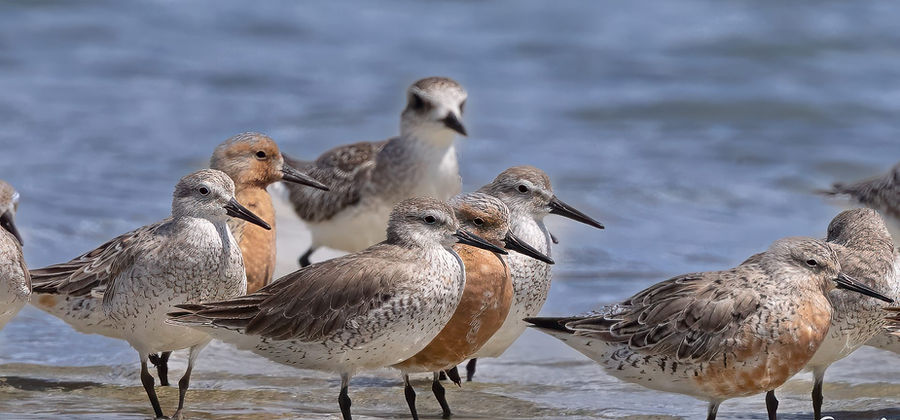
Photo: Joe Cardinale

Photo: Robert So / Pexels
Use Renewable Energy
In the Sunshine State, clean energy can cut pollution, lower bills, and work alongside habitat and farms.
Why it matters, and an easy way to start
Solar power reduces the carbon and other pollutants released when we make electricity. That means cleaner air and water for people and wildlife (U.S. Department of Energy).
AWE is a partner in this year's Solar United Neighbors co-op. The Southwest Florida 2026 Solar Co-op is open to residents of Lee and Collier counties, and the last day to join is January 29, 2027. Joining is free and doesn't commit you to buying anything. Members get unbiased help from SUN, and together they choose one installer to serve the group at a competitive price.
Solar basics for homes, businesses, and HOAs
-
Rooftop panels work best on roofs facing south without heavy shade. Check your roof's age before you install. Renters and shaded homes can look into community solar (DOE guide, linked above).
-
Hire NABCEP-certified installers, and watch out for high-pressure sales tactics.
-
Florida law says HOAs and deed restrictions can't ban solar collectors.
-
On homes, the added value of a solar system is left out of property tax assessments, and qualifying solar equipment is exempt from sales tax.
-
The federal residential solar tax credit doesn't apply to systems installed after December 31, 2025 (IRS).
Solar that works with farms and nature
"Agrivoltaics" pairs solar panels with crops, grazing, or pollinator habitat under and between the rows. Native plants and pollinator plantings can grow beneath ground-mounted arrays, which means less mowing and herbicide (DOE Farmer's Guide).
Efficiency first
The cleanest energy is the energy you never use. Heating and cooling can make up as much as half of a home's energy use. Sealing air leaks and adding insulation is often the most cost-effective upgrade (ENERGY STAR). An efficient home also needs less solar to power it (DOE guide). Businesses, HOAs, and other organizations can benchmark building energy use with ENERGY STAR tools.
Take action

Photo: Audubon Western Everglades

Photo: Audubon Western Everglades
Vote for Nature
The choices made at the county commission and the ballot box shape our water, wildlife, and open spaces as much as anything we do at home.
Why local decisions matter
County and city governments decide where growth goes, how stormwater is handled, and which natural lands are bought and protected. Voters have backed conservation here. Since 2003, Conservation Collier has bought land from willing sellers to protect rare habitat, water quality, flood control, and listed species. As of August 2026, the county commission had approved 6,672 acres across 28 project locations. Lee County voters created Conservation 20/20 in 1996 and reaffirmed it in 2016 with 84 percent support. The program now protects about 30,000 acres.
Show up and speak up
-
Collier County Commission: meetings start at 9 a.m. on scheduled Tuesdays at the Government Center, 3299 Tamiami Trail East. To speak in person, fill out a speaker form before your item comes up. To speak remotely, register online before the meeting starts. Speakers generally get three minutes.
-
Lee County Commission: meetings are at 9:30 a.m. on the first and third Tuesdays at the Old Lee County Courthouse, 2120 Main St., Fort Myers.
-
Citizen advisory committees review land before it's bought. Lee's CLASAC meets monthly and is open to the public. Collier's Land Acquisition Advisory Committee makes recommendations on Conservation Collier purchases.
-
Contact your commissioners by phone or email. Find Collier commissioners and Lee commissioners online. You can also look up your state senator.
2026 election update
The 2026 General Election is Tuesday, Nov. 3. The deadline to request a vote-by-mail ballot is 5 p.m. Thursday, Oct.
22. Mail ballots must be received by 7 p.m. on Election Day, regardless of postmark (Florida Division of Elections; WGCU). Collier elections: 239-252-8683. Lee elections: 239-533-8683. Find early voting dates and sites at colliervotes.gov and lee.vote.
Stay in the loop
Find AWE action alerts on our News page whenever a local decision affects owls, tortoises, wetlands, or water.

